There is a highly specific, quietly maddening moment most women hit sometime in their late thirties or forties. You haven't changed your diet. You are still taking the same spin classes, eating the same sensible lunches, and operating with the same general discipline you always have.
And yet, the results have changed. Your midsection feels different. Your favorite jeans require a slight negotiation to button. The exercise that used to make you feel sharp and lean now just leaves you feeling drained, and your recovery takes days instead of hours.
The immediate, culturally ingrained instinct is to tighten the reins. We are conditioned to believe that changing body composition is simply a math problem: eat less, move more. So, you cut back. You skip breakfast, shrink your portions, or try the latest cleanse aggressively marketed on your social feed.
But instead of snapping back to your baseline, you feel worse. The fatigue deepens, the brain fog rolls in, and the waistline refuses to budge.
This is not a failure of willpower. It is a failure to understand the biological shift occurring beneath the surface. The old approach stopped working because the biology underneath changed, not because the effort became insufficient.
The Hormonal Driver of Metabolic Shift
Metabolic function in women is inextricably linked to our hormonal baseline. Throughout our twenties and early thirties, estrogen acts as a powerful metabolic regulator. It plays a direct role in maintaining insulin sensitivity—our body's ability to efficiently process glucose and use it for energy rather than storing it as fat.
As we cross into our late thirties and forties, estrogen begins its uneven, unpredictable decline. When estrogen drops, insulin resistance tends to increase. This changes how the body processes food, stores fat, and recovers from exercise. Suddenly, visceral fat—the fat that accumulates around organs rather than just under the skin—begins to increase, independent of whether your diet or activity levels have changed.
This is why the old diet rules no longer apply. You are managing a different physiological landscape.
The Caloric Restriction Trap
When you drastically cut calories in this new hormonal environment, your body does not calmly burn fat. It panics.
Significant caloric restriction in this decade commonly produces muscle loss alongside any fat loss, which worsens the underlying metabolic picture. Less muscle means a lower resting metabolic rate—a compounding cycle that makes maintaining your weight progressively harder.
Furthermore, extreme restriction and over-training elevate cortisol, our primary stress hormone. High cortisol directly promotes the accumulation of visceral fat, completely undermining your efforts. The women who do best metabolically in this decade are almost always eating more protein and doing more resistance training — not less of everything.
The Pivot: What Actually Works Now
To navigate this decade without feeling like you are constantly fighting your own body, you have to pivot your strategy from subtraction to structural addition.
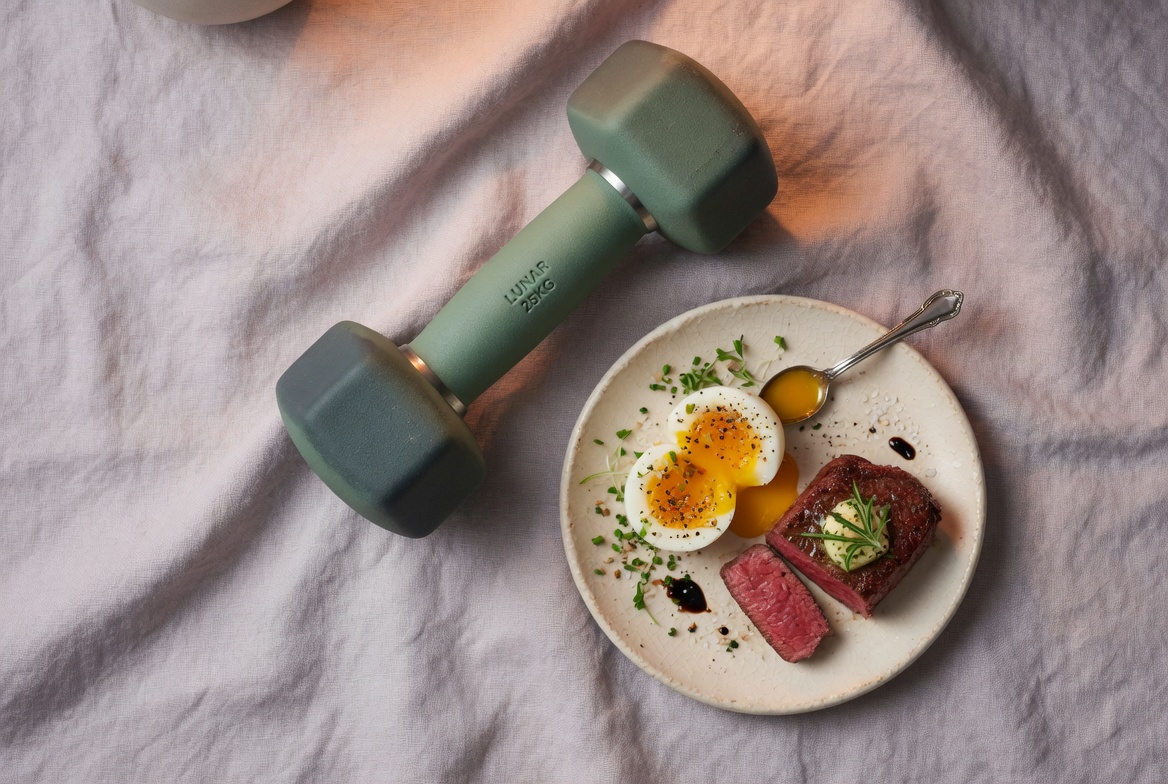
- Make Protein the Anchor: For many women in this decade, the single highest-leverage nutritional change is increasing protein. The standard recommendation of 0.8g per kilogram of body weight is grossly insufficient for active women navigating hormonal shifts. The targets with the best evidence sit between 1.6 and 2.2g per kilogram daily. This requires a deliberate shift: aim for 35–40g of protein at each main meal to effectively trigger muscle repair and growth.
- Prioritize Resistance Training: Muscle acts as the body's primary glucose disposal site. More muscle means better glucose management and lower post-meal insulin spikes. Resistance training is not primarily a body composition tool in this decade; it is a metabolic one. Two to three sessions a week of lifting weights that feel genuinely challenging is the highest-ROI activity available.
- Focus on Glucose Stability, Not Low-Carb: You do not necessarily need to eliminate carbohydrates, but you do need to contextualize them. The same amount of carbohydrate eaten alongside protein and fat produces a vastly different, more stable blood sugar response than when eaten alone.
The reality of the metabolic pivot is actually quite liberating. It is permission to stop starving yourself. Metabolism in your forties responds best to structure, muscle, and nourishment—not punishment.